Insure 90: The Resilient Insurance System That Refuses to Retire

When you think about cutting-edge insurance technology, your mind probably doesn’t jump to a system built on 1980s IBM hardware. Yet here we are in 2026, and Insure 90—a specialized insurance management platform running on the AS400 (now IBM i)—continues to power critical operations for insurance companies across the globe.
It’s a bit like discovering that some of the world’s most advanced airlines still rely on cockpit instruments designed decades ago. Why? Because when something works exceptionally well, sometimes the smartest move is to keep it running.
What Exactly Is Insure 90?
Let me break this down in plain English. Insure 90 isn’t your typical consumer insurance product—you won’t find it advertised on TV or see agents selling it door-to-door. Instead, it’s the invisible backbone that insurance companies themselves use to manage their entire operation.
Think of it as the engine room of an insurance company. While customers interact with sleek mobile apps and modern websites on the surface, behind the scenes, Insure 90 is quietly handling:
- Policy administration – Creating, updating, and managing every detail of insurance policies
- Claims processing – Tracking claims from submission through settlement
- Workflow management – Routing tasks to the right departments and people
- Payment processing – Managing premiums, refunds, and claim payments
- Risk assessment – Evaluating and pricing insurance risks
The system operates on IBM’s AS400 platform (officially rebranded as IBM i running on Power Systems), which has earned a legendary reputation for reliability. We’re talking about systems that provide massive redundancy and can integrate modern technologies like artificial intelligence.
The Surprising History Behind Insure 90
Here’s where things get interesting. Insure 90 was developed during an era when insurance companies needed rock-solid systems that could handle enormous volumes of transactions without failing. The developers chose IBM’s AS400 platform specifically for its reliability and ability to support extensive insurance databases.
Originally created using CREATE90 technology, the system was purpose-built for insurance ERP (Enterprise Resource Planning). Major insurance companies like CGU, Ansvar, Mitsui, and Admiral have relied on it for decades. The Beacon Insurance Company in Trinidad still uses it across their operations in the Caribbean.
What’s remarkable isn’t just that these companies are still using Insure 90—it’s that many have actively chosen to modernize it rather than replace it entirely. When Beacon Insurance analyzed their options, they found that replacing their Insure/90 system carried too much risk, with costs too high and timelines too long. Instead, they upgraded it with modern workflow capabilities.
Why Insurance Companies Still Trust Insure 90 in 2026
You might be wondering: “If this system is so old, why hasn’t it been replaced?” Fair question. The answer reveals something fascinating about enterprise technology.
1. Unmatched Stability and Uptime
Insurance companies can’t afford downtime. When someone files a claim after a car accident or house fire, they need immediate service. The AS400 platform that Insure 90 runs on is known for supporting manufacturers, financial organizations, insurers, and healthcare companies as a central part of their digital infrastructure.
One insurance provider reported reducing processing time by 30% after implementing proper Insure 90 workflows, citing faster data access and automated processes as key factors.
2. Integration Capabilities That Surprise Everyone
Here’s something that catches people off guard: despite its age, Insure 90 integrates remarkably well with modern systems. Companies have successfully connected it with:
- Contemporary document management systems
- Web-based customer portals
- Mobile applications
- Cloud services
- Modern payment gateways
Admiral Insurance integrated Insure 90 with IBM’s Enterprise Content Management solution, creating a unified desktop application where staff could access documents and process data simultaneously. This eliminated the frustration of switching between multiple systems.
3. Cost-Effectiveness That Makes CFOs Smile
Replacing an entire insurance system is eye-wateringly expensive. We’re talking millions of dollars in software licenses, years of implementation time, massive training costs, and the very real risk of catastrophic failure during migration.
Insure 90’s design allows for low-risk implementation with no complex data conversion. This translates directly to lower operational costs, which smart insurers can pass along as more competitive premiums to their customers.
4. Backward Compatibility That Saves Fortunes
Applications built years or even decades ago still run without issues on today’s IBM Power Systems without needing major rewrites. This means insurance companies don’t have to rebuild their entire software stack every time technology evolves.
For businesses with highly customized insurance products and processes, this is invaluable. They can evolve step-by-step rather than taking a risky leap into completely new systems.
Real-World Applications: How Insure 90 Powers Different Insurance Operations
Property and Casualty Insurance
Insure 90 excels at managing complex property insurance, particularly in scenarios involving the “90/10 coinsurance” rule. This is where the “90” in Insure 90 becomes especially relevant—the system efficiently handles policies where coverage must meet 90% of a property’s replacement value.
For residential and commercial property insurers, this means accurate valuation, proper coverage calculations, and streamlined claims when buildings are damaged or destroyed.
Health Insurance Administration
Short-term health insurance providers use Insure 90 to manage temporary coverage periods, often spanning—you guessed it—90 days. The system handles:
- Quick enrollment processes
- Essential healthcare service coverage tracking
- Doctor visit and emergency care claims
- Limited hospital stay management
- Premium calculations for short-term policies
These 90-day policies serve people transitioning between jobs, waiting for employer coverage to kick in, or needing temporary protection without long-term commitments.
Travel and Supplemental Coverage
Insurance companies offering travel protection and supplemental policies rely on Insure 90’s flexibility. The system manages trip cancellation insurance, medical emergencies abroad, lost luggage claims, and various accident or critical illness supplements.
The Technical Architecture That Makes It All Work
For the tech-savvy readers wondering about the nuts and bolts, here’s what makes Insure 90 tick:
Database Structure: Built on DB2 databases within the AS400/IBM i environment, Insure 90 manages structured data with remarkable efficiency. The platform’s relational database capabilities support complex insurance products with multiple coverage tiers, exclusions, and pricing variables.
Programming Languages: The system primarily uses RPG (Report Program Generator) and COBOL, both of which remain surprisingly relevant. These languages integrate seamlessly with modern options like Java, Python, and PHP through IBM i’s versatile environment.
Workflow Management: Modern implementations of Insure 90 have added sophisticated workflow frameworks. These track application timelines, identify processing delays, and ensure regulatory compliance by monitoring every step from policy creation to claim settlement.
Security Features: Running on IBM i provides enterprise-grade security with built-in encryption, role-based access controls, and comprehensive audit trails—critical features for handling sensitive customer data and meeting regulatory requirements.
The Modernization Journey: Updating Without Starting Over
Several insurance companies have taken an intelligent middle path with Insure 90. Rather than abandoning decades of reliable service, they’ve modernized selectively.
Beacon Insurance used LANSA’s modernization and workflow framework approach, which integrated seamlessly with Insure/90 and carried low risk without needing data conversion. This strategy involved:
- Adding web services for modern API integration
- Implementing workflow tools to measure and improve processing timelines
- Enhancing the user interface while keeping the robust backend intact
- Integrating document management for paperless operations
- Creating mobile access for agents and customers
The result? Enhanced efficiency and customer experience without the massive disruption and risk of complete system replacement.
Who Should Consider Insure 90 Today?
In 2026, Insure 90 makes sense for specific types of insurance operations:
Regional insurance companies that value stability over flashy features and need proven systems they can customize extensively.
Organizations with complex legacy data that can’t afford risky migrations. If you have decades of policy history and claims data, maintaining continuity becomes paramount.
Insurers in highly regulated markets where system reliability and comprehensive audit trails matter more than having the newest technology.
Companies with experienced AS400/IBM i staff who understand the platform and can leverage its capabilities effectively.
The Honest Downsides: What Insure 90 Isn’t Great At
Let’s be real—no system is perfect. Insure 90 has some legitimate drawbacks:
Limited developer talent pool: Finding RPG and COBOL programmers who understand insurance systems is increasingly difficult. Job sites show more than 2,500 open positions for AS400 professionals, highlighting both ongoing demand and talent scarcity.
User interface challenges: The original green-screen terminal interface looks decidedly dated compared to modern cloud-based insurance platforms. While this can be modernized, it requires additional investment.
Initial learning curve: New employees accustomed to contemporary software may struggle initially with Insure 90’s interface and workflows, requiring comprehensive training.
Perception problems: Convincing stakeholders and investors that a system running on “1980s technology” is the right choice can be an uphill battle, even when it’s technically sound.
The Future: Where Insure 90 Goes From Here
Despite its age, Insure 90 isn’t disappearing anytime soon. The insurance industry moves cautiously, and systems that work reliably tend to stick around far longer than tech enthusiasts might expect.
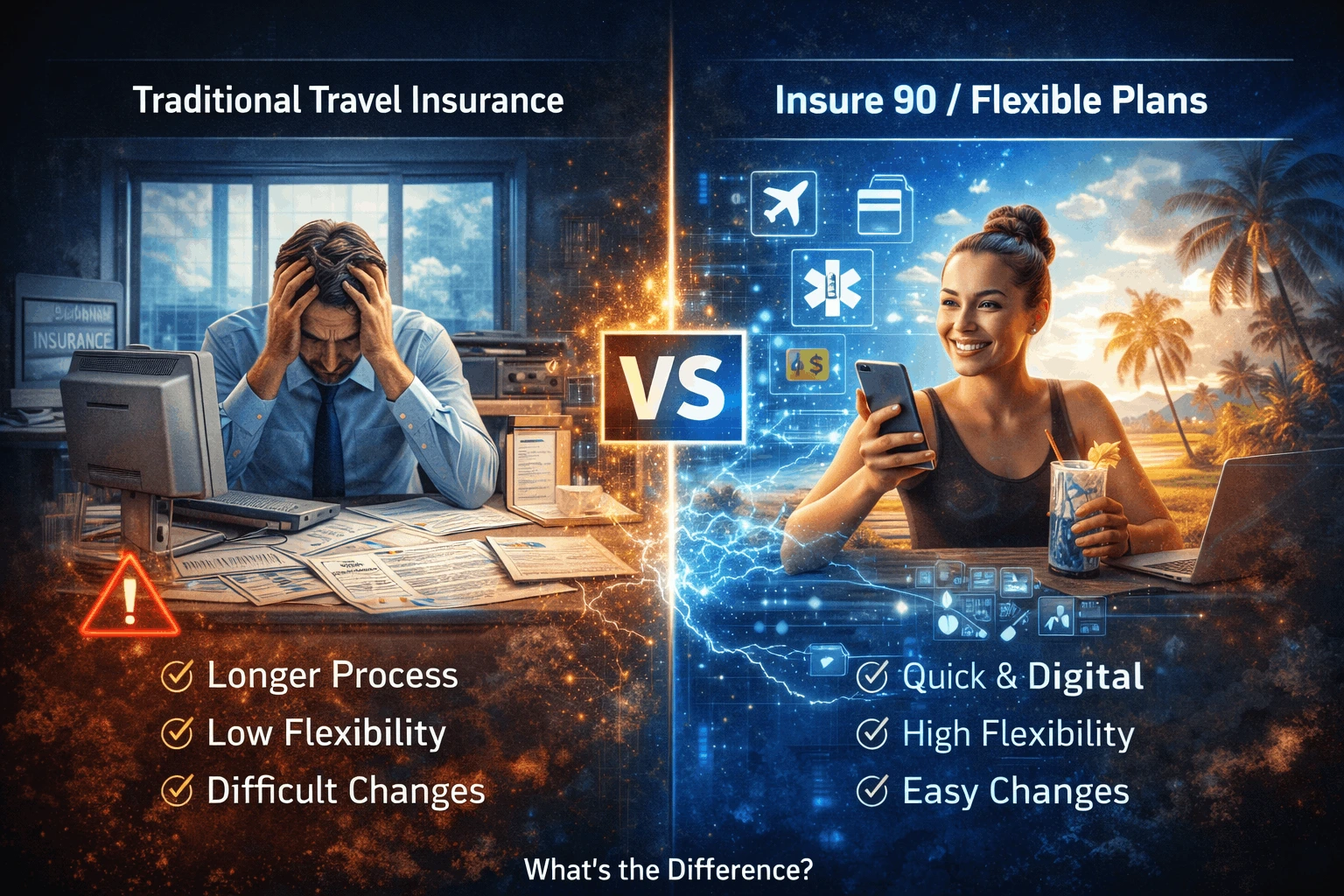
The most likely future involves hybrid approaches:
- Continued modernization with improved interfaces and API integrations
- Cloud connectivity while keeping core processing on-premises
- Gradual feature additions rather than wholesale replacement
- Integration with AI and analytics tools for enhanced decision-making
- Maintained compliance with evolving regulatory requirements
Some companies will eventually migrate away as AS400/IBM i expertise becomes scarcer, but many will keep Insure 90 running for years or even decades more.
Practical Considerations for Insurance IT Leaders
If you’re evaluating whether Insure 90 fits your organization, consider these questions:
Do you have (or can you acquire) the technical expertise to maintain and optimize AS400/IBM i systems?
What’s your risk tolerance for system replacement? Conservative organizations often find that sticking with proven systems makes more sense than risky migrations.
How complex is your existing insurance product portfolio? Highly customized products often work better with flexible legacy systems than rigid modern platforms.
What are your actual pain points? If your current Insure 90 implementation works well, focus on targeted improvements rather than replacement.
Can you afford 3-5 years of disruption? Full system migrations typically take this long and consume enormous resources.
Making Sense of the Insure 90 Paradox
There’s something deeply counterintuitive about a decades-old insurance system remaining relevant in our age of cloud computing, artificial intelligence, and real-time everything. Yet Insure 90’s continued success teaches us valuable lessons about enterprise technology.

Sometimes “old” doesn’t mean “obsolete.” Sometimes the boring, stable solution beats the exciting new platform. Sometimes the best technology investment isn’t the flashiest one—it’s the one that works reliably day after day, year after year, allowing your business to focus on serving customers rather than managing IT crises.
Insure 90 embodies a fundamental truth about mission-critical systems: when you’ve built something that handles billions of dollars in policies and claims without failure, “if it ain’t broke, don’t fix it” becomes genuinely wise advice rather than just resistance to change.
For insurance companies navigating the complex intersection of legacy systems and modern expectations, Insure 90 represents a viable path forward—one that honors the past while selectively embracing the future.
Frequently Asked Questions About Insure 90
Q: Can individual consumers buy Insure 90 insurance policies?
A: No, Insure 90 isn’t a consumer insurance product. It’s a management system that insurance companies use internally. However, you might be covered by a policy managed through Insure 90 without knowing it—many insurers use it behind the scenes.
Q: Is Insure 90 still actively supported in 2026?
A: Yes, though support comes through specialized IT consultancies and IBM i service providers rather than a single vendor. Companies like Ravenswood Consulting, LANSA, and various IBM partners provide implementation and support services.
Q: How much does Insure 90 cost to implement?
A: Costs vary dramatically based on company size, customization needs, and existing infrastructure. However, one key advantage is that maintenance fees remain manageable compared to modern cloud-based alternatives, especially for companies already operating IBM i environments.
Q: What happens if Insure 90 eventually becomes unsupported?
A: Given that IBM continues actively developing the Power Systems platform and IBM i operating system, complete abandonment is unlikely for decades. Companies have contingency plans ranging from gradual migration to maintained legacy environments with archived data.
Q: Can Insure 90 integrate with modern insurtech solutions?
A: Absolutely. Through web services, APIs, and middleware solutions, Insure 90 can connect with contemporary customer portals, mobile apps, analytics platforms, and third-party services. Many successful modernization projects maintain Insure 90 as the core system while adding modern interfaces.
This article was researched and written for TechSerp.com to provide insurance technology professionals with comprehensive, practical insights into Insure 90 systems. For more information about insurance technology solutions, legacy system modernization, and enterprise software strategies, explore our extensive library of technical guides and industry analysis.
Enjoyed this insight?
Talk to our team about applying these strategies to your website.